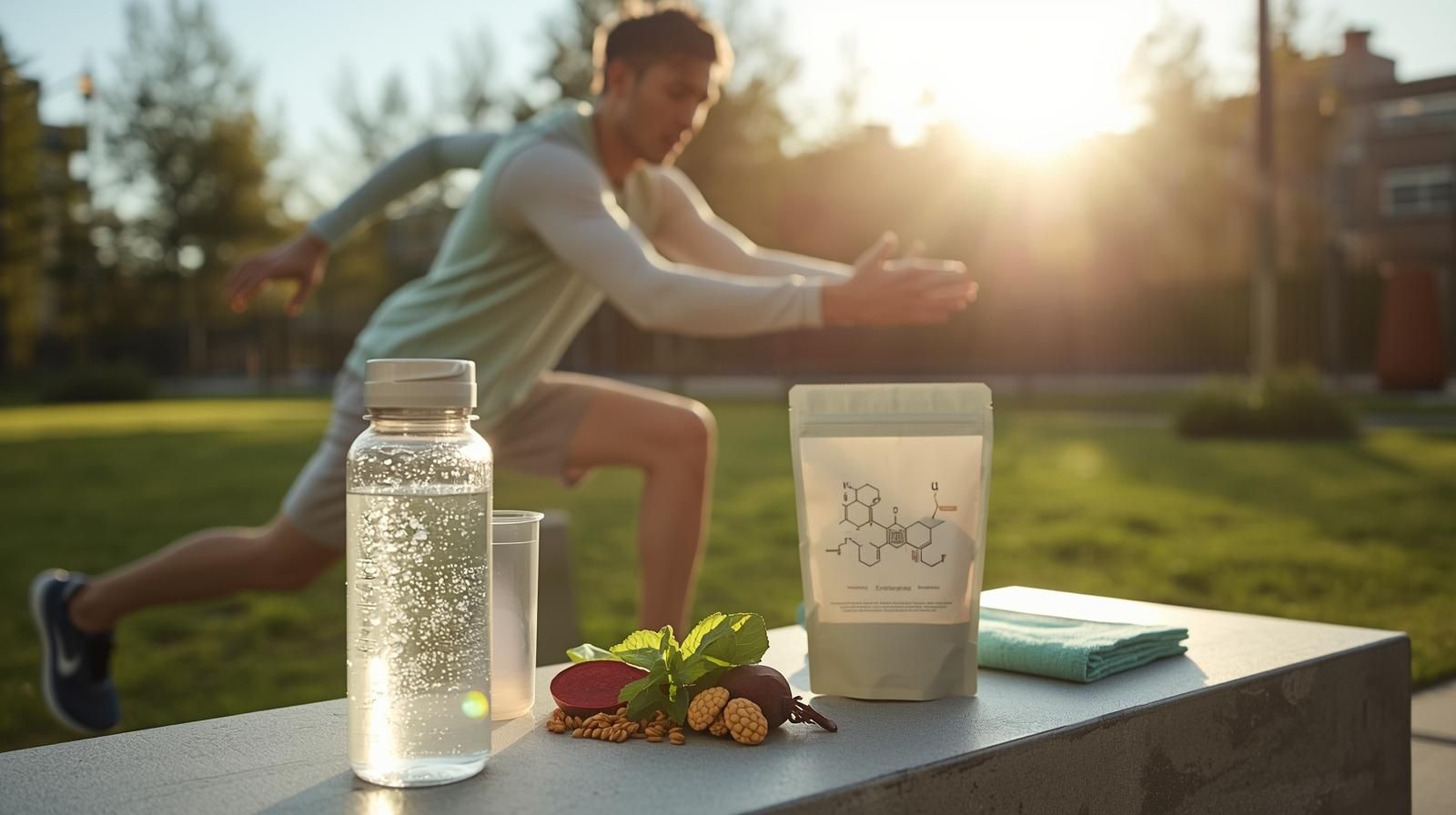
What is betaine?
If you’ve ever wondered “what is betaine,” think of it as a small, water-loving molecule your body already makes—and you also eat it in certain foods. Chemically called trimethylglycine, betaine donates methyl groups that help recycle homocysteine back to methionine, mainly in the liver and kidneys. It also acts as an osmolyte, helping cells stay balanced under stress. In the UK/EU, foods or supplements that provide enough betaine may claim they “contribute to normal homocysteine metabolism,” with an advised intake of 1.5 g/day for that benefit and a warning that more than 4 g/day may raise blood cholesterol. Evidence-led and regulated: that’s the tone to keep in mind. (academic.oup.com)
Why it’s in the news now
Fresh research maps how our bodies adapt from a single workout to weeks of training and spotlights a kidney–betaine pathway at the heart of many “exercise is anti‑ageing” effects. In volunteers and animal models, sustained exercise raised circulating betaine; intriguingly, giving betaine on its own reproduced several training‑like benefits, notably calming inflammation. Mechanistically, the team reports that betaine can inhibit TBK1, a pro‑inflammatory kinase—offering a plausible link between movement, immunity and longevity signals. Early, exciting, and very much a “watch this space” moment. (sciencedaily.com)
What is betaine found in? Everyday food sources
Wholegrains and leafy greens quietly carry most of the load. Classic lab analyses list some of the richest foods per 100 g as wheat bran (~1,339–1,506 mg), wheat germ (~1,241–1,395 mg), spinach (~645–725 mg), pretzels (~237–266 mg), shrimp (~218–246 mg), and standard wheat bread (~201–227 mg). Milling matters: most betaine in wheat sits in the bran and germ, so wholegrain choices deliver more. ()