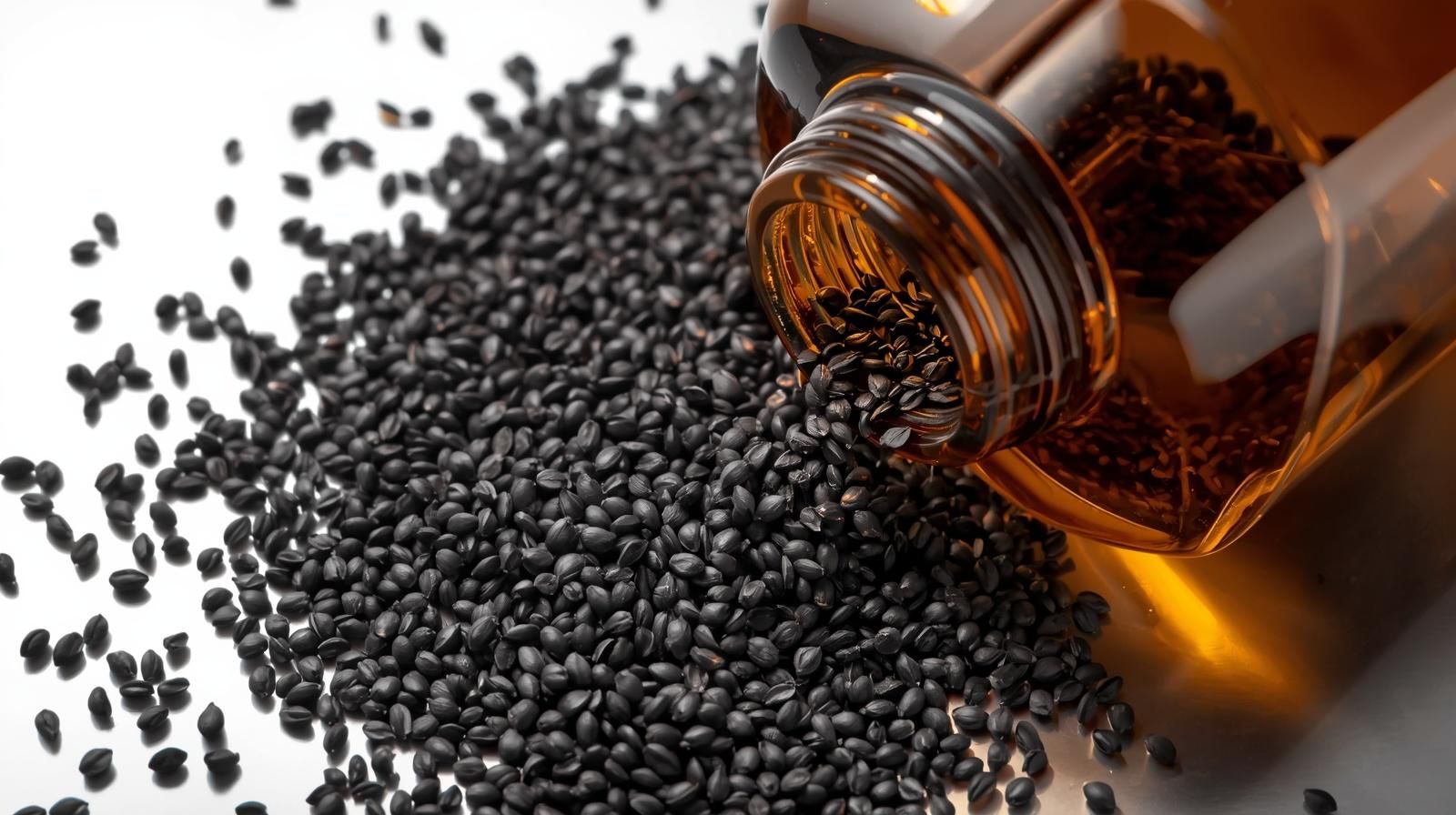
When a remedy has been treasured across three millennia and three continents, it’s worth paying attention. Black seed oil, pressed from the tiny seeds of _Nigella sativa_, has found its way into Islamic medicine, Ayurveda, and ancient Egyptian healing traditions. What makes this particularly intriguing is that modern science is now catching up with what traditional healers have long known — this unassuming black seed might have some genuinely impressive properties.
The seeds themselves look rather ordinary, resembling tiny black sesame seeds with a slightly bitter, peppery taste. Yet Islamic tradition holds them in such high regard that they’re sometimes called “habbat al-barakah” — the blessed seed. Ancient Egyptian tombs contained vials of the oil, and Ayurvedic texts praised its warming, balancing properties. The question is: what were they all seeing that we’re only now beginning to understand?
The Science Behind the Tradition
The key seems to lie in a compound called thymoquinone, which makes up roughly 30-48% of black seed oil’s volatile compounds. Research suggests this molecule works as a powerful modulator of inflammation — not by simply suppressing it, but by helping to regulate the body’s inflammatory response more intelligently.
Studies indicate that thymoquinone may influence several inflammatory pathways simultaneously. It appears to reduce the production of pro-inflammatory molecules like TNF-alpha and interleukin-6, while supporting the body’s natural anti-inflammatory processes. This isn’t about blocking inflammation entirely — which would be problematic, as we need some inflammation for healing — but rather about helping the body maintain better balance.
What’s particularly fascinating is that thymoquinone also seems to support cellular antioxidant systems. Research suggests it may help boost glutathione levels and enhance other natural antioxidant enzymes, potentially offering protection against oxidative stress at the cellular level.