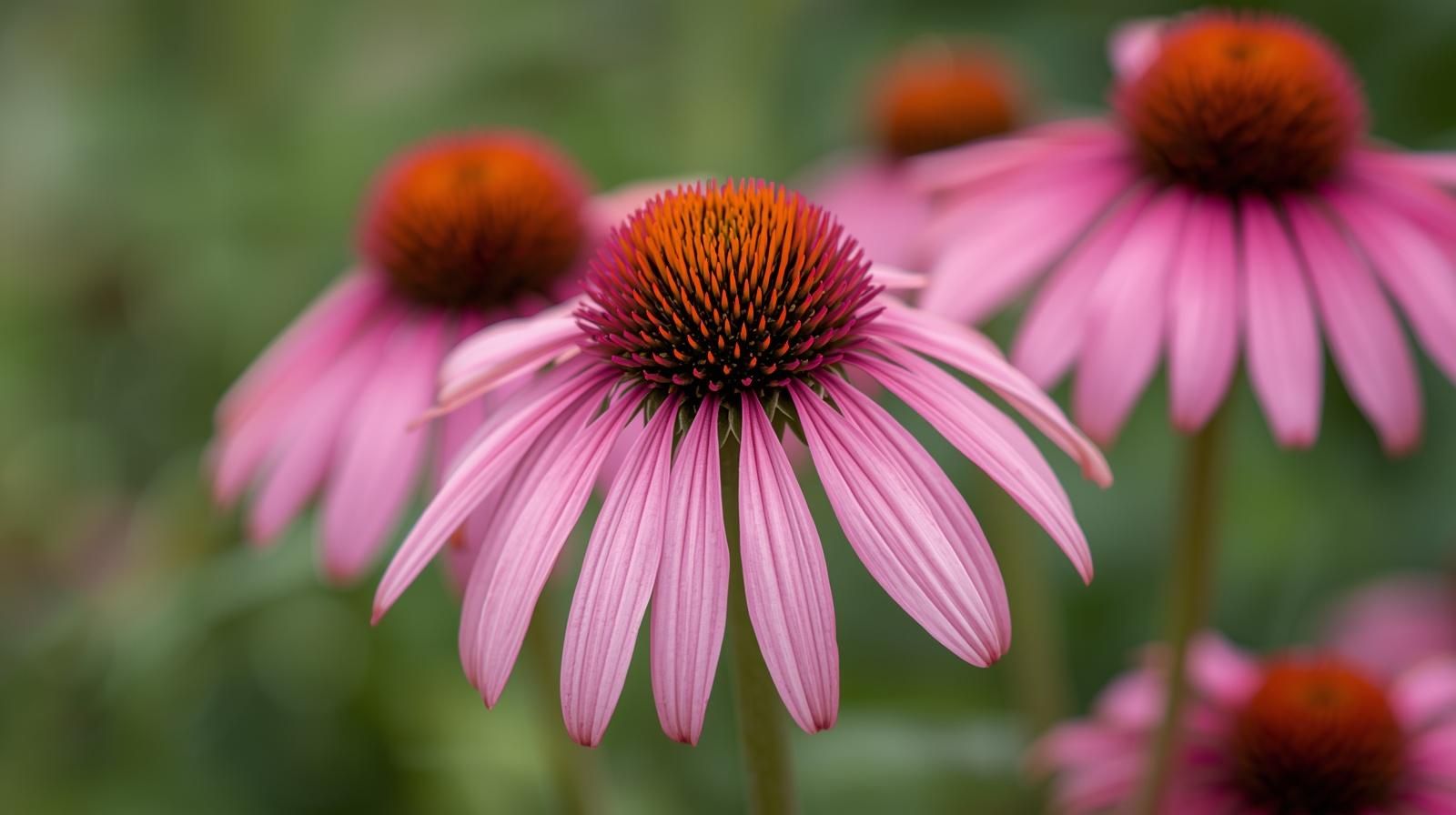
Walk down any UK pharmacy’s herbal remedy aisle, and you’ll spot purple coneflower products dominating the shelves. Echinacea has claimed the throne as Britain’s best-selling herbal remedy, with millions of us reaching for it at the first sniffle. But does this popularity stem from solid science, or are we collectively buying into botanical folklore dressed up in modern packaging?
The Three-Species Problem Nobody Talks About
Here’s where things get immediately complicated: when you buy “echinacea,” you’re not necessarily getting what the studies tested. Three different species dominate the market – _Echinacea purpurea_, _E. angustifolia_, and _E. pallida_ – and they’re not interchangeable.
Most clinical research has focused on _E. purpurea_, particularly the aerial parts (leaves and flowers). Yet many commercial products contain _E. angustifolia_ root, or blend multiple species without clear ratios. This matters because the active compounds vary significantly between species and plant parts.
_E. purpurea_ contains higher levels of phenolic compounds like chicoric acid, while _E. angustifolia_ is richer in alkamides – both potentially important for immune function, but in different ways. When studies show mixed results for echinacea, this botanical confusion often explains why.
What the Big Picture Research Actually Shows
The most comprehensive analysis comes from the Cochrane Collaboration, which reviewed 24 controlled trials involving over 4,500 people. Their findings paint a nuanced picture that marketing departments prefer to gloss over.
For cold prevention, the evidence is disappointing. Taking echinacea regularly doesn’t significantly reduce your chances of catching a cold – a blow to those pre-winter supplement routines. The pooled data showed only a modest 10-20% reduction in cold incidence, which wasn’t statistically significant.