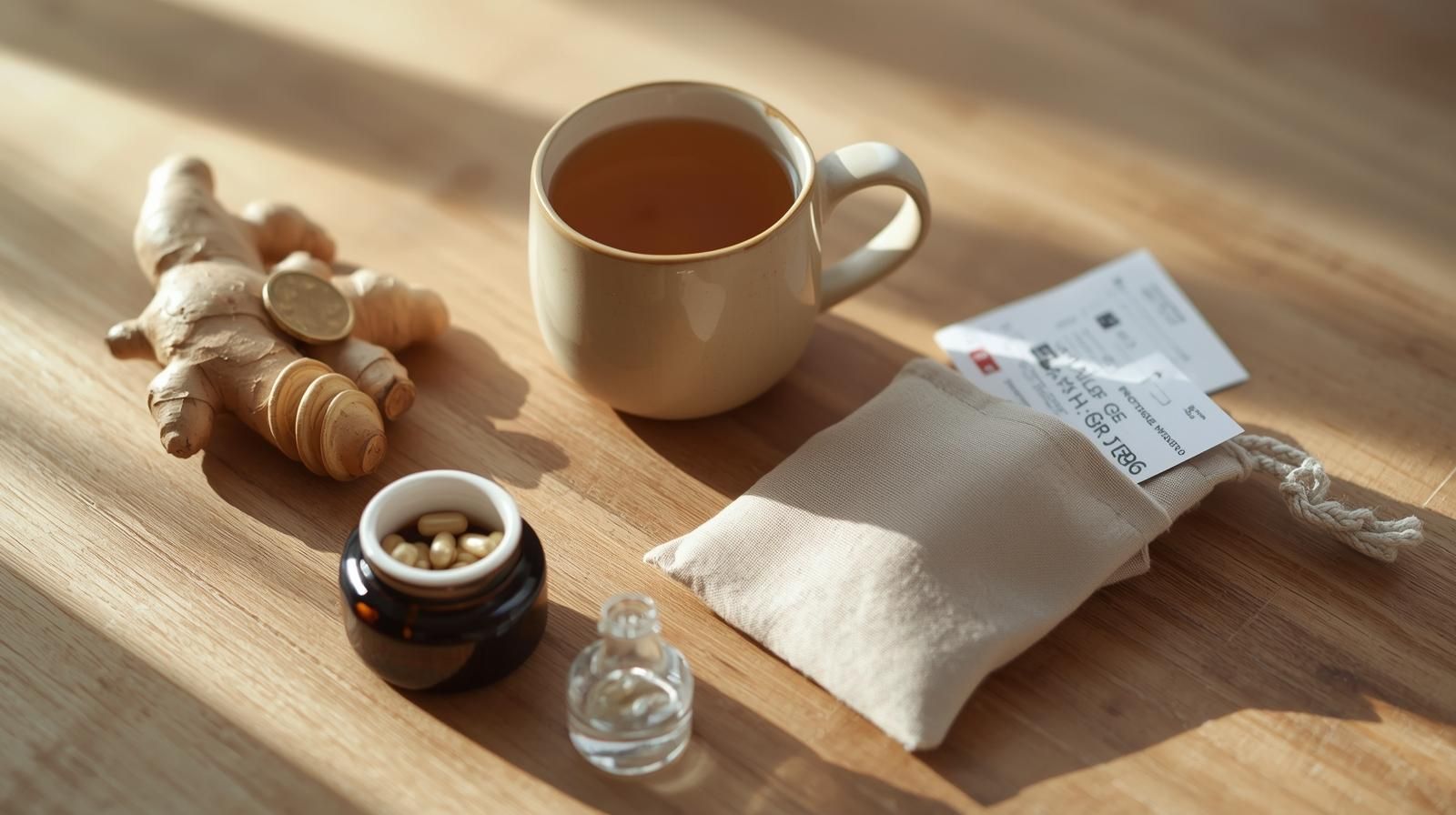
Fresh, dried, brewed or encapsulated—ginger is one of those rare kitchen staples with a plausible scientific story for both post‑meal comfort and travel days. Its signature compounds, gingerols and shogaols, appear to calm the gut’s nausea circuitry by gently damping 5‑HT3 (serotonin) receptors on enteric and vagal neurons—similar in direction (though not in strength) to prescription antiemetics. That mechanism gives a credible bridge between tradition and lab bench.
Digestion support: what formats help? In a small randomised study in functional dyspepsia, encapsulated ginger taken before a light test meal increased antral contractions and sped gastric emptying versus placebo—physiology that lines up with the way many people describe ginger tea easing a heavy, slow stomach. This nudging of motility doesn’t mean an instant fix, but it suggests ginger can help a meal move along more comfortably.
Motion comfort: where does the evidence land? Trials are mixed—a classic open‑sea study in naval cadets found powdered ginger reduced vomiting and cold sweats versus placebo; rotating‑chair experiments were neutral; a lab study using visual motion (circular vection) reported less nausea with ginger and fewer motion‑linked gastric rhythm disturbances. Taken together, that reads as “may help some people, especially at sea or with visual triggers,” rather than a universal shield like scopolamine.
Choosing your format
- Fresh root: Great for tea and cooking. Heat and drying transform gingerols into shogaols—molecules that, in vitro, can be even more potent at the same serotonin targets—so a simmered infusion or cooked dish isn’t “weaker,” just different. (pmc.ncbi.nlm.nih.gov)
- : A thumb‑sized slice steeped 5–10 minutes delivers warming aromatics and a gentle pre‑bed or post‑meal ritual that’s easy to repeat. If whole flowers and blends tempt you at night, ginger pairs well with chamomile for a softer profile.