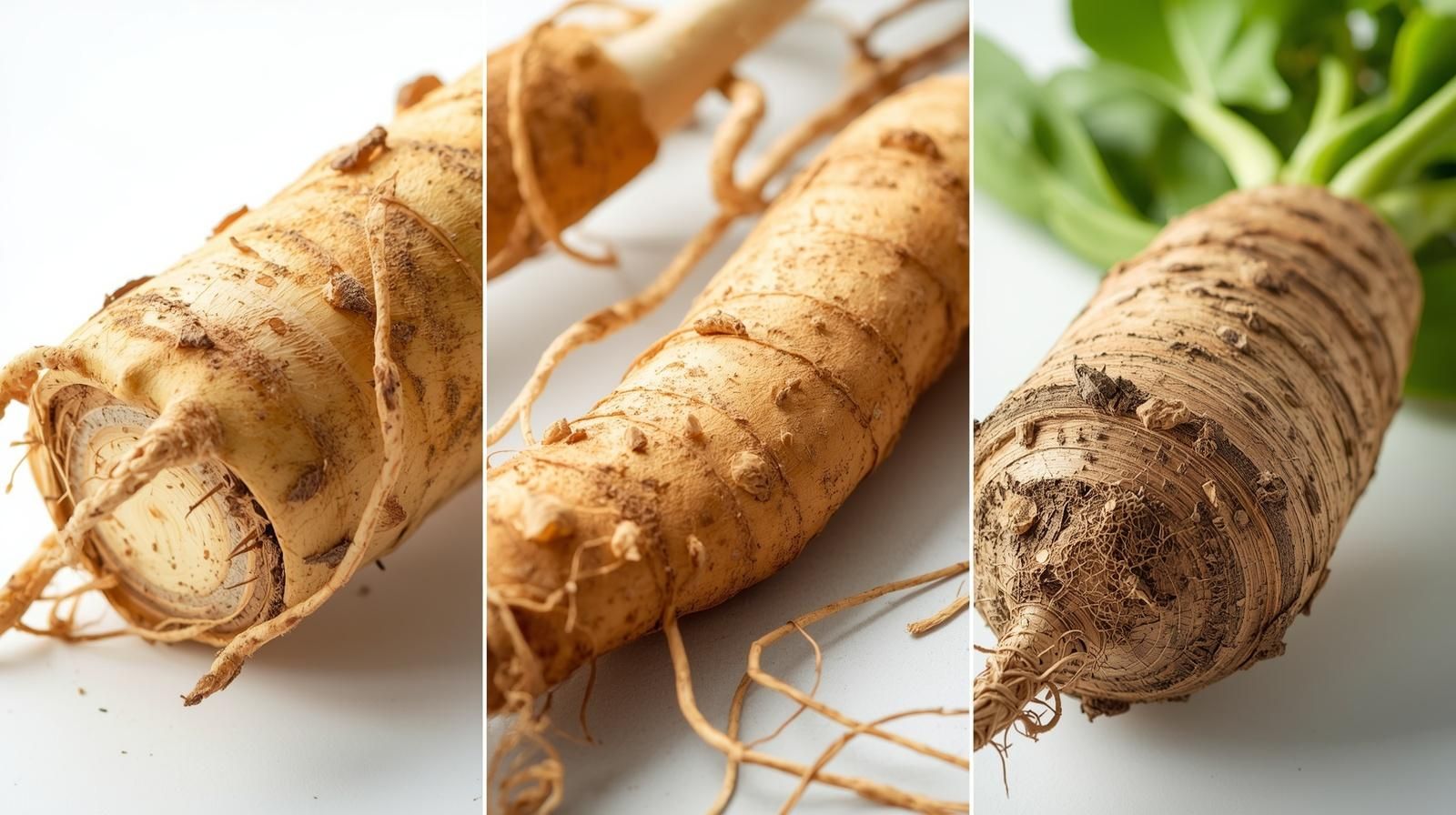
Walk into any health shop and you’ll see shelves lined with ginseng supplements, each promising to boost your energy and sharpen your mind. But here’s what might surprise you: not all ginseng is actually ginseng, and the differences between types could mean the difference between feeling energised or simply disappointed with your purchase.
The confusion around ginseng types isn’t just marketing muddle—it’s a genuine botanical puzzle that even researchers grapple with. Understanding these differences matters because each type works differently in your body, and choosing the wrong one for your needs might explain why that expensive supplement isn’t delivering the results you hoped for.
The True Ginsengs: Panax Family Explained
When herbalists talk about “true ginseng,” they’re referring to plants in the Panax genus. These are the heavy hitters of the ginseng world, and they’re quite different from each other despite sharing a family name.
Panax ginseng, also called Korean or Asian ginseng, is the original superstar. Research suggests this variety has the most potent effects on energy and cognitive function, thanks to its high concentration of specific compounds called ginsenosides. In traditional Chinese medicine, it’s considered a “warming” herb, used to boost energy and combat fatigue. Studies indicate that Panax ginseng may help improve mental performance, particularly during periods of stress, and some research suggests it could support healthy blood sugar levels.
Panax quinquefolius, or American ginseng, takes a gentler approach. Traditional medicine systems describe it as “cooling,” making it potentially more suitable for people who tend to feel overheated or stressed. Research indicates American ginseng may be particularly effective for blood sugar regulation—some studies suggest it can help manage post-meal glucose spikes. The ginsenoside profile differs significantly from its Asian cousin, with higher levels of certain compounds that may explain its more calming effects.