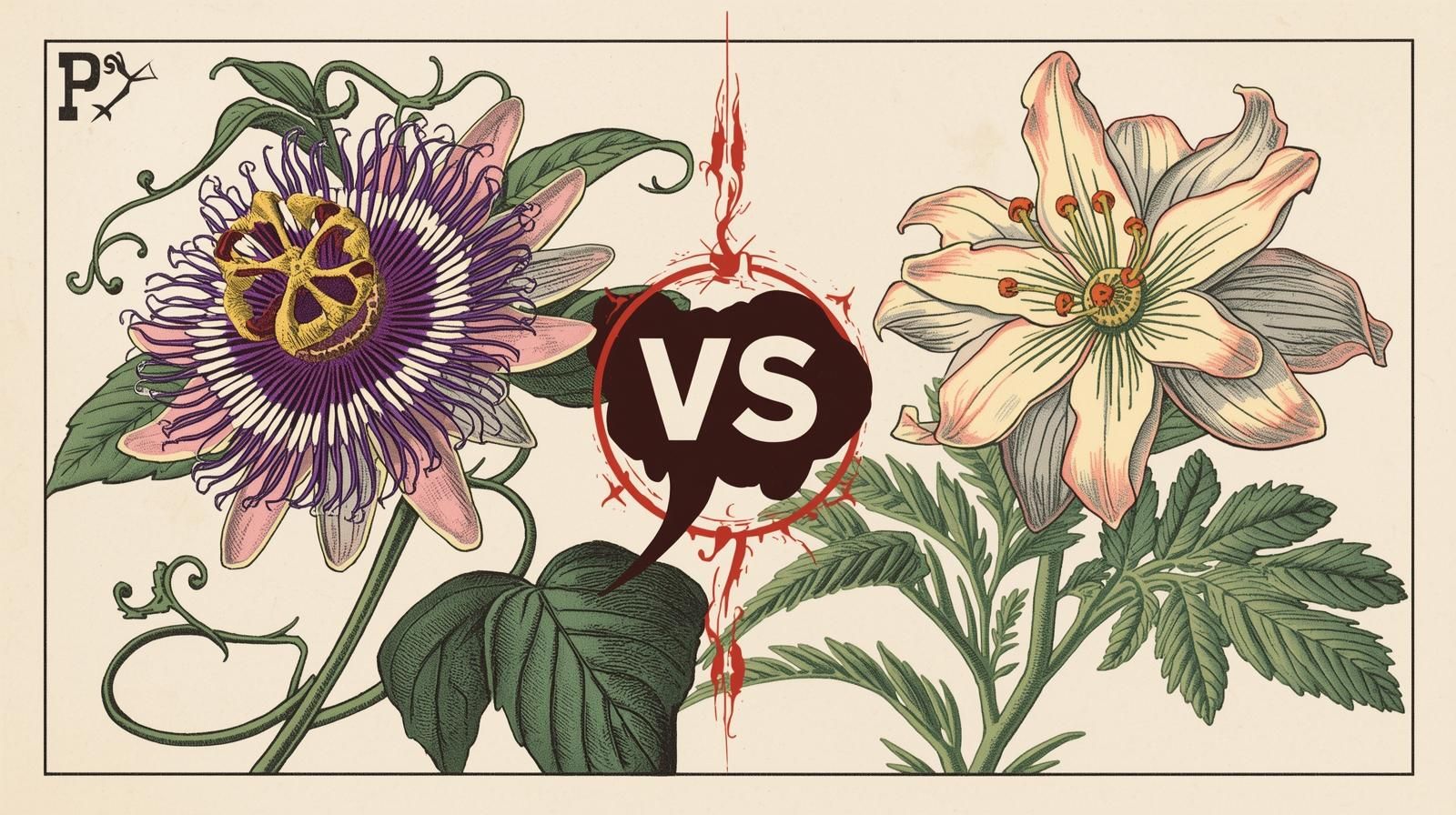
You’ve likely heard someone mention passionflower tea for “calming the nerves” or seen valerian supplements promising better sleep. Both herbs have earned reputations as gentle alternatives to pharmaceutical sedatives, but which one actually delivers on the research front? The answer, as it turns out, depends entirely on what you’re trying to achieve.
The Chemistry Behind Calm
Passionflower (_Passiflora incarnata_) and valerian (_Valeriana officinalis_) work through distinctly different pathways in your nervous system, which explains why they excel at different tasks. Passionflower’s calming effects primarily stem from flavonoids, particularly chrysin, which appears to modulate GABA-A receptors in the brain. GABA is your nervous system’s natural “brake pedal” – when these receptors are activated, anxiety signals quiet down.
Valerian, meanwhile, works through a more complex mechanism involving the breakdown of GABA itself. Its active compounds, including valerenic acid, may inhibit an enzyme that breaks down GABA, allowing this calming neurotransmitter to stick around longer. This difference in action helps explain why valerian tends to be more sedating overall, whilst passionflower offers anxiety relief without the same drowsy effects.
Where Passionflower Shines: The Pre-Surgery Evidence
The strongest clinical evidence for passionflower comes from studies on pre-surgical anxiety – that specific type of acute nervousness that builds before medical procedures. A well-designed clinical trial found that passionflower extract was as effective as oxazepam (a benzodiazepine medication) at reducing anxiety before surgery, but without causing the same level of sedation or memory impairment.
Research suggests that 500-750mg of standardised passionflower extract, taken 90 minutes before a stressful event, may significantly reduce anxiety levels. What’s particularly interesting is that participants reported feeling calmer without feeling drowsy – a crucial distinction if you need to remain alert during the day.